Into the Woods: Mushroom Season on Washington’s Evergreen Coast
There’s something about fall on Washington’s Evergreen Coast that makes you want to head into the woods.
The air gets cooler. Rain returns to the coast. Forest floors soften beneath towering evergreens, and tucked among moss, fallen needles, decaying logs, and ferns, another world begins to appear.
Mushrooms.
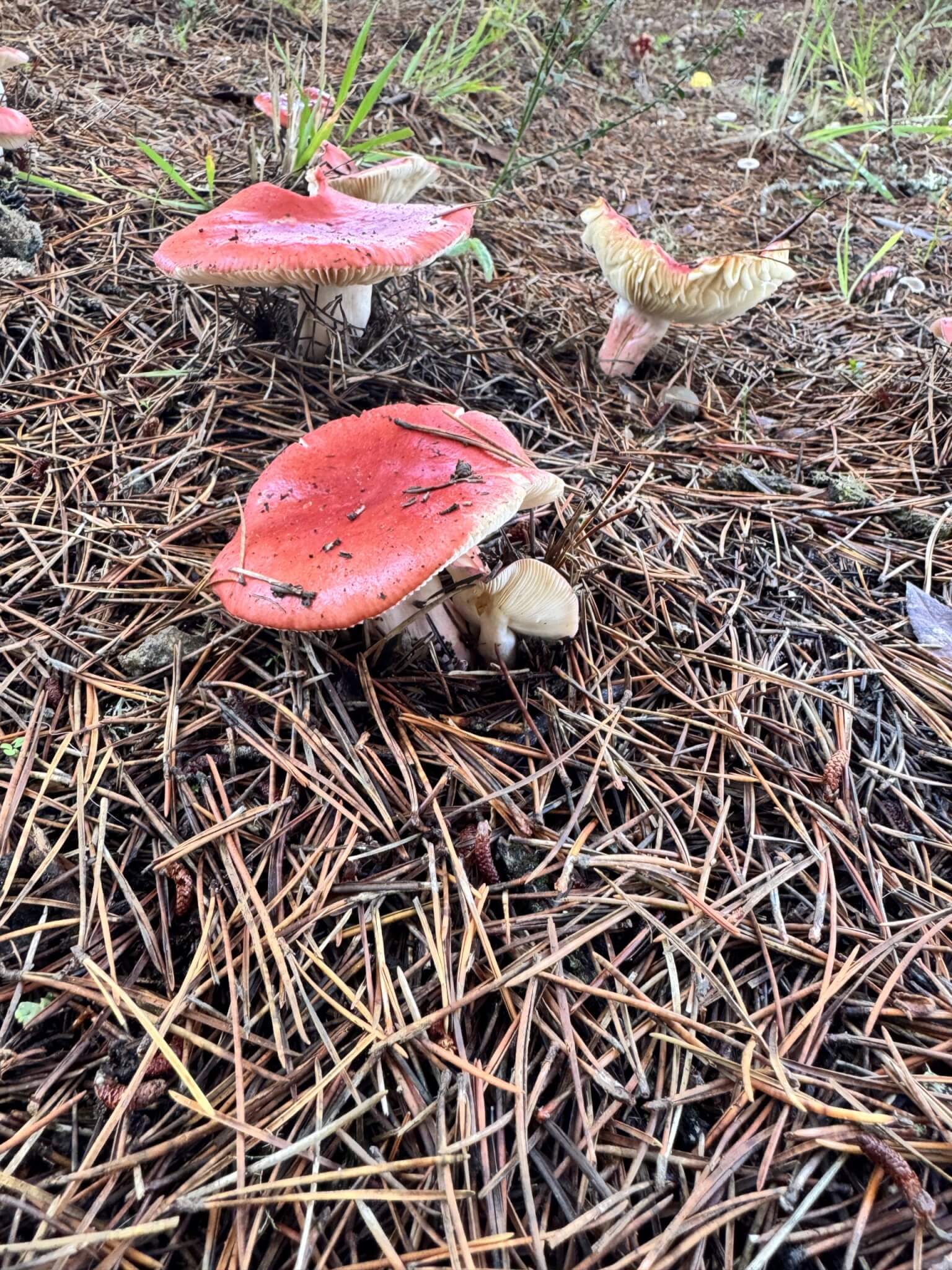
September is National Mushroom Month, and it arrives just as the forests of Pacific County begin transitioning into one of the most fascinating times of the year for fungi.
From colorful mushrooms that are best admired through a camera lens to prized edible varieties sought by experienced foragers, mushroom hunting offers another reason to slow down and take a closer look at the wild side of Washington’s Evergreen Coast.
And sometimes, the best part is simply seeing what you can find.
Why Mushrooms Love the Washington Coast
If you were designing a place for mushrooms to thrive, the Pacific Northwest would be difficult to beat.
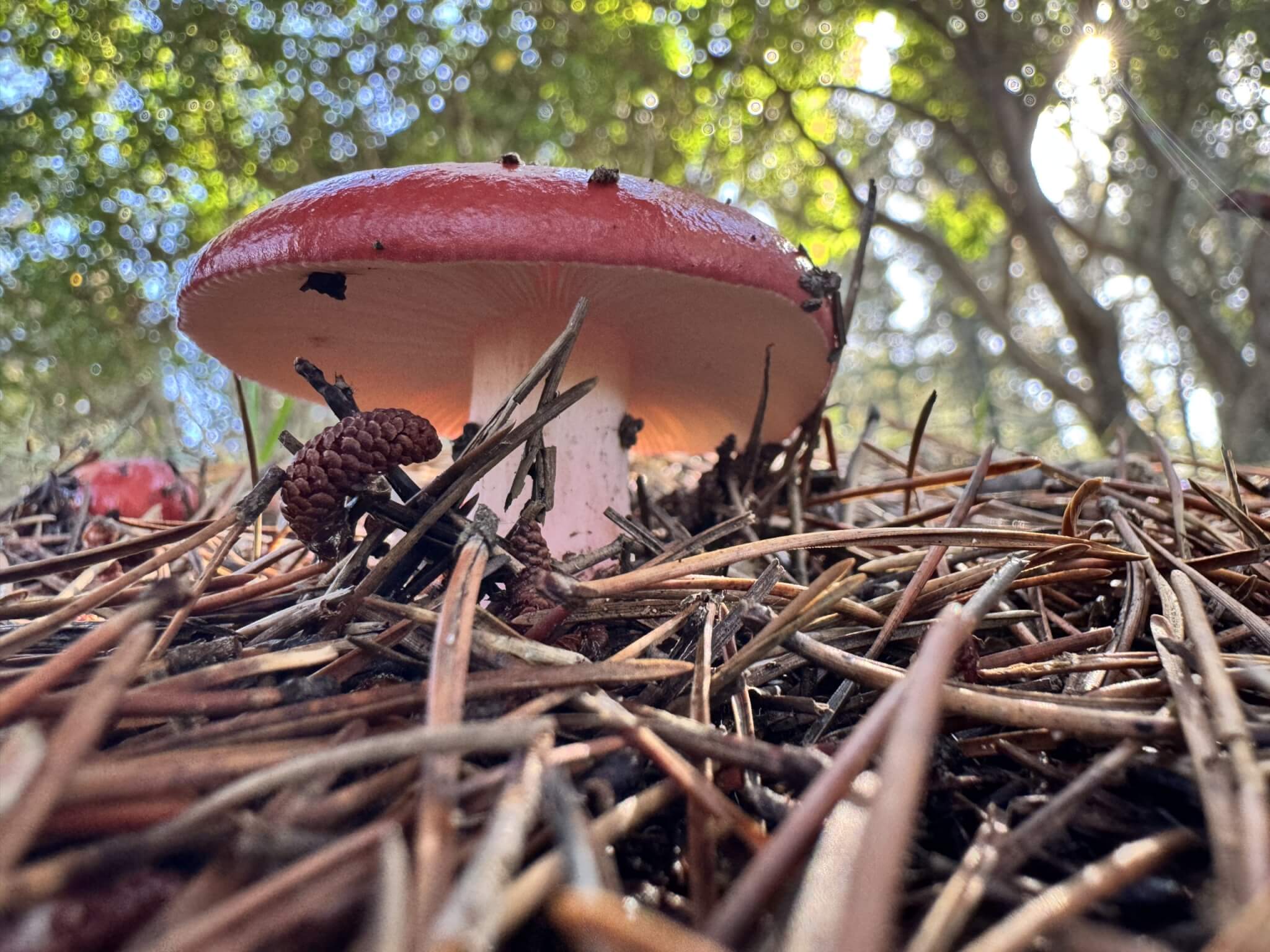
Pacific County’s coastal forests provide plenty of the ingredients fungi love: moisture, mild temperatures, decaying wood, rich forest floors, and an abundance of trees.
Mushrooms are also much more than the colorful caps we notice beside the trail.
What we see above ground is typically just the fruiting body of a much larger fungal organism. Beneath the soil or inside wood is a network of tiny fungal threads called mycelium.
Some fungi help break down dead trees and other organic material, returning nutrients to the ecosystem. Others form relationships with living trees, exchanging nutrients and helping support healthy forests.
So when you spot a mushroom poking through the moss, you’re seeing just one small piece of an enormous—and incredibly important—forest system.
Mushrooms You May Encounter
Pacific Northwest forests are home to an extraordinary diversity of fungi, and what you encounter will vary depending on habitat, rainfall, temperature, and time of year.
A few mushrooms associated with western Washington and the Pacific Northwest include:
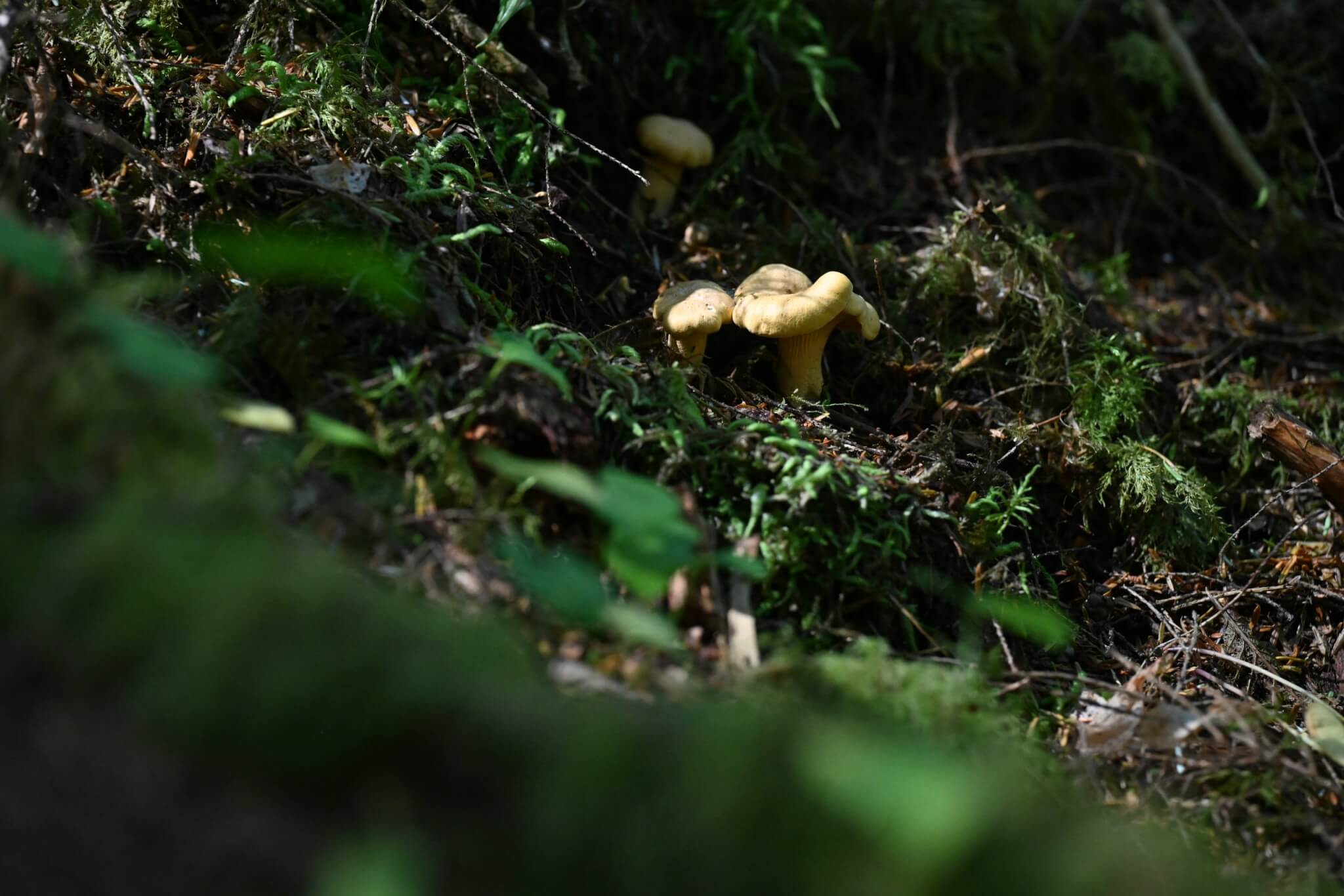
Pacific Golden Chanterelles
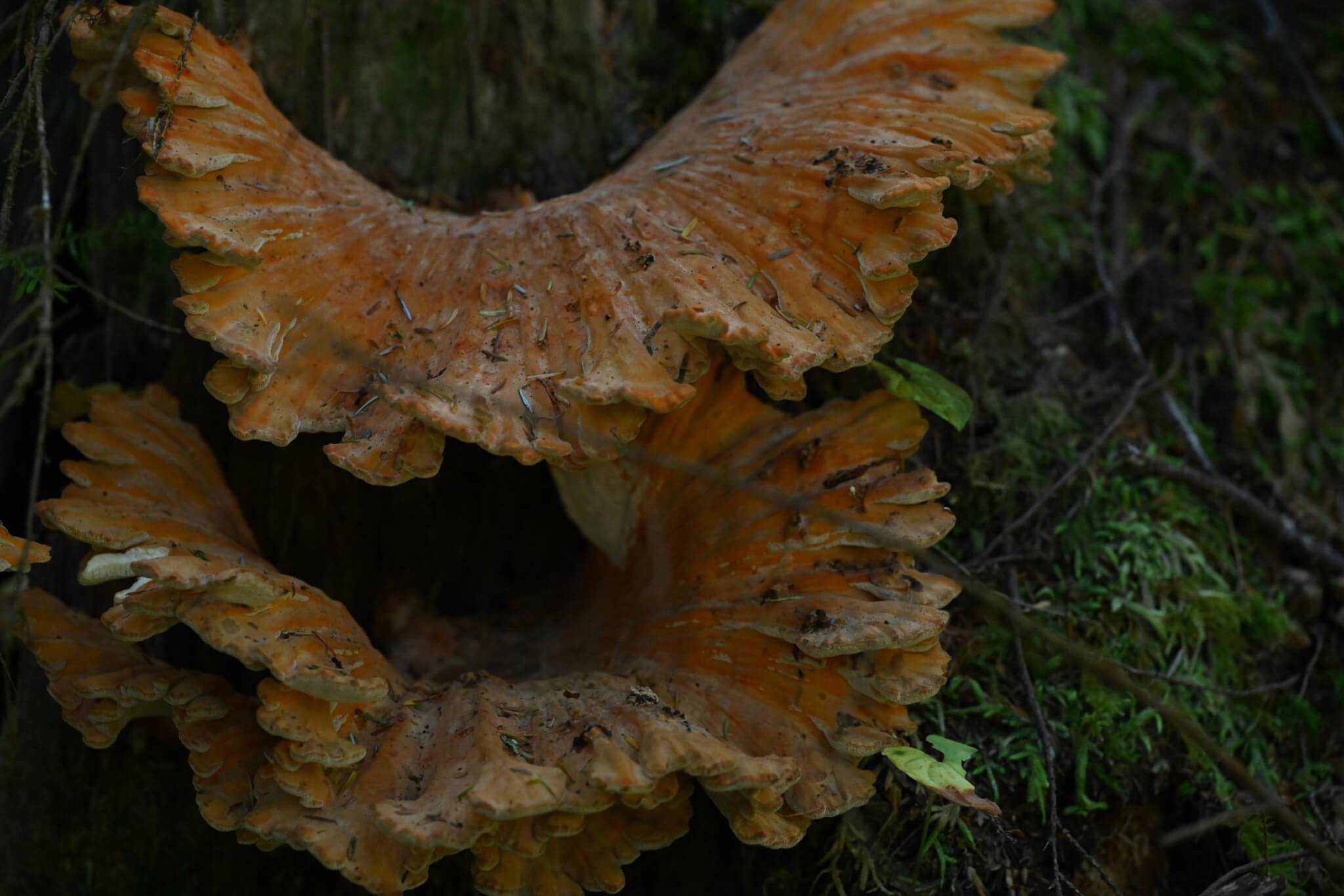
The Pacific golden chanterelle is one of the Northwest’s best-known edible mushrooms. Its golden-yellow to orange color can make it stand out against a dark forest floor.
Chanterelles are associated with forest environments and often begin appearing as wetter fall weather arrives.
But don’t rely on color alone. Other mushrooms can resemble chanterelles, and proper identification is essential before consuming any wild mushroom.
King Boletes, or Porcini
These substantial mushrooms are another prized edible species found in the Pacific Northwest.
Rather than traditional gills beneath the cap, boletes have a sponge-like layer of tiny pores. King boletes are often associated with conifer forests and can appear following favorable combinations of moisture and temperature.
Lobster Mushrooms
These are difficult to miss.
Lobster mushrooms are known for their brilliant orange to reddish-orange exterior and dense texture. Interestingly, the lobster mushroom isn’t simply one mushroom species growing on its own. It results when a parasitic fungus grows over another mushroom and dramatically changes its appearance.
They’re one of the more unusual characters you might encounter on a fall forest walk.
Oyster Mushrooms
Look toward the trees instead of just at the ground and you may encounter mushrooms growing from wood.
Oyster mushrooms typically grow in clusters on dead or dying hardwood and have broad, fan- or oyster-shaped caps.
Hedgehog Mushrooms
Flip over the cap of a hedgehog mushroom and you’ll understand the name.
Instead of gills, the underside has small tooth-like spines. Several species of hedgehog mushrooms occur in the Pacific Northwest and are among the region’s recognized edible wild mushrooms.
And Many, Many More
Not every mushroom needs to end up in a basket.
In fact, mushroom season can be just as much fun when you treat it like a scavenger hunt.
Look for tiny mushrooms growing from fallen branches, enormous shelf fungi attached to trees, delicate mushrooms barely rising above the moss, and fungi in surprising shades of orange, red, yellow, purple, white, and brown.
Take photos. Compare shapes. Look underneath the cap without damaging the mushroom. Notice whether it’s growing from soil, a fallen log, or a living tree.
You may be surprised by how many different kinds you can find during a single forest walk.
Mushroom Hunting Tips for Beginners
If you’re heading out to see what you can discover, a few simple tricks can make mushroom hunting even more enjoyable.
Go after the rain.
Fall rain can help trigger mushroom fruiting. A wet stretch followed by mild weather can be a great time to explore.
Slow down.
Mushroom hunting isn’t about covering miles. Some of the most interesting fungi are tiny and easy to walk right past.
Look around trees and fallen wood.
Different fungi associate with different trees and habitats. Look around conifers, hardwoods, stumps, fallen logs, and areas with thick layers of moss and forest debris.
Look up, too.
Not all mushrooms grow from the ground. Shelf fungi and other species grow directly from standing or fallen trees.
Bring a camera.
Even if you have no intention of collecting mushrooms, photographing them can become an addictive fall activity. Try photographing the cap, underside, stem, surrounding habitat, and the tree species nearby.
Dress for the coast.
Fall mushroom weather is also rain-jacket weather. Waterproof footwear and layers can make a damp forest walk much more enjoyable.
Thinking About Foraging? Know Before You Go
Seeing a mushroom and eating a mushroom are two very different things.
If you’re new to mushroom hunting, make your first few trips about learning rather than harvesting.
Consider going with an experienced mushroom forager or local mycological group and use reputable field guides to learn the characteristics used to identify mushrooms.
Never identify a mushroom based solely on a photograph or one characteristic such as its color.
Identification can involve the cap, gills or pores, stem, base, bruising or staining, smell, habitat, nearby trees, spore characteristics, and other features.
And remember:
An app or online photo should never be your only reason for deciding a wild mushroom is safe to eat.
A Very Important Warning: Some Mushrooms Are Dangerous
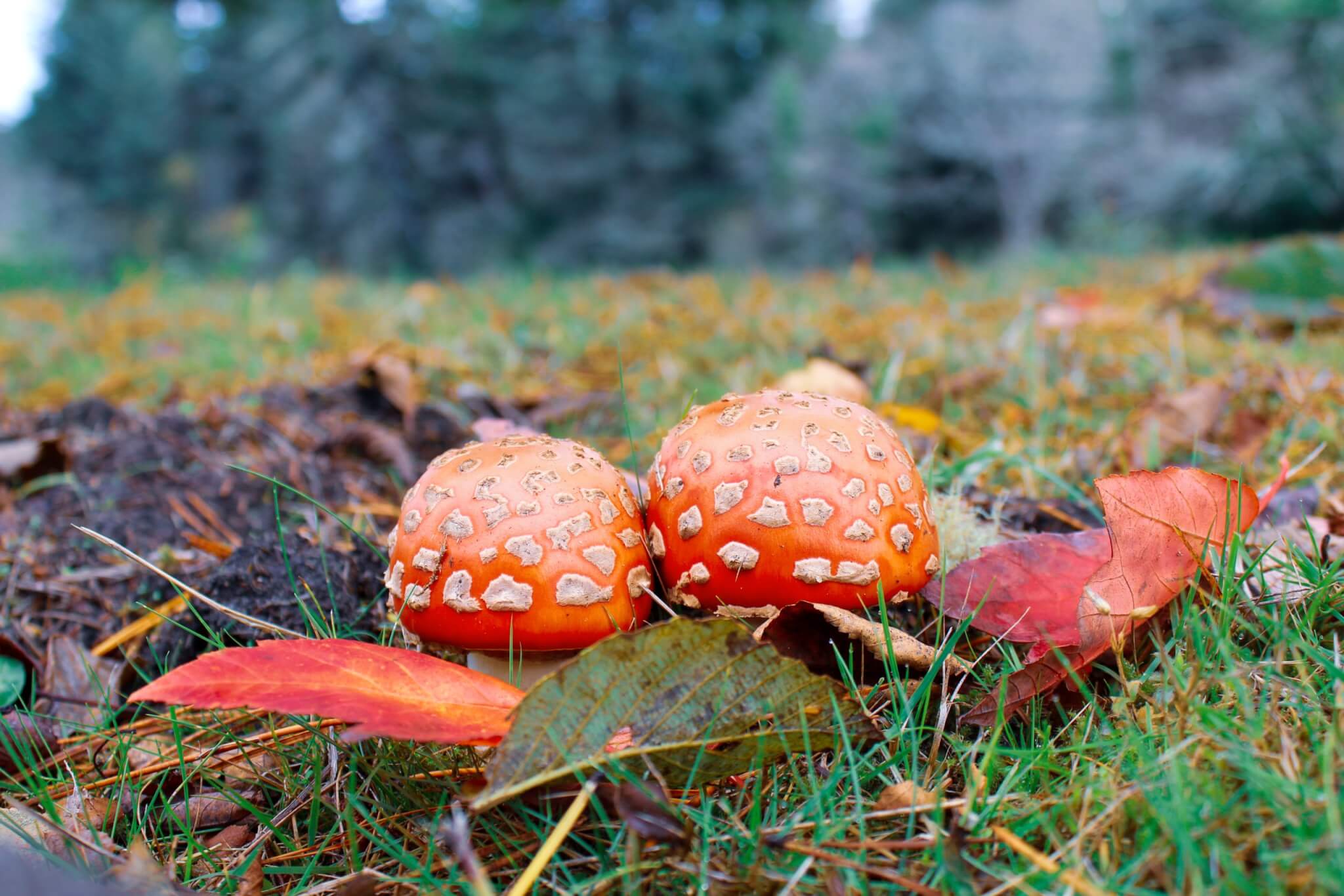
Pacific Northwest forests contain poisonous mushrooms, and some can cause severe illness or death.
To an inexperienced mushroom hunter, a toxic mushroom can sometimes resemble an edible species.
There is no universal trick for determining whether a mushroom is poisonous. Cooking a poisonous mushroom doesn’t necessarily make it safe, and folklore-based tests should never be trusted.
If there is any uncertainty about a mushroom’s identity:
Do not eat it.
For beginners, the safest approach is to learn alongside an experienced mushroom identifier before consuming anything collected in the wild.
If you suspect someone has eaten a poisonous mushroom, contact the Washington Poison Center at 1-800-222-1222. For severe symptoms such as difficulty breathing, seizures, or loss of consciousness, call 911.
Know Where You Can—and Cannot—Collect
Finding a mushroom doesn’t automatically mean you’re allowed to pick it.
Rules vary depending on who manages the land, and visitors should always verify current regulations before collecting.
Washington State Parks generally allow recreational harvesting of edible mushrooms for personal consumption up to two gallons per person per day, unless otherwise posted. Harvesting is prohibited within Natural Area Preserves, and techniques such as raking that can damage natural resources are prohibited.
Washington Department of Natural Resources-managed lands have their own rules and limits, and harvesting is prohibited in certain areas.
One particularly important rule for visitors to Pacific County:
Do not collect mushrooms at Willapa National Wildlife Refuge.
The refuge asks visitors not to collect or move natural materials, including mushrooms, plants, berries, and antler sheds.
That doesn’t mean you can’t enjoy mushroom season there. Bring your camera instead and leave everything exactly where you found it.
Rules can change and individual properties may have additional restrictions, so always check with the land manager before harvesting. Never collect mushrooms from private property without permission.
Leave Some Behind
Even where mushroom harvesting is allowed, responsible foraging means thinking beyond your own basket.
Take only what you’ll actually use. Avoid disturbing surrounding vegetation and forest soil. Don’t rake through the forest floor looking for mushrooms. Be mindful of other visitors, wildlife, and the ecosystem around you.
And sometimes, leave the mushroom right where it is.
Someone else may get just as much enjoyment from discovering it later.
Find a Different Side of Fall
Fall on Washington’s Evergreen Coast gets plenty of attention for storm watching, uncrowded beaches, migrating birds, cozy restaurants, and colorful sunsets.
But head beneath the forest canopy and an entirely different season is unfolding.
The next time you’re walking through the woods, slow down.
Look beside the trail.
Check the moss around the trees.
Look at that old fallen log.
You might discover an entire miniature world hiding in plain sight.
And remember: when it comes to wild mushrooms, when in doubt, leave it out—and enjoy the hunt with your camera instead.

Casi Gerig is a Long Beach, Washington local and emerging writer for Washington’s Evergreen Coast. She focuses on helping visitors discover what makes this stretch of coastline so special—from outdoor adventures to small-town experiences worth the trip. As a local, she brings a genuine perspective to her work and a passion for sharing her community with others. Outside of writing, Casi can be found crafting or walking her rescue dogs on the beach with her two kids.